
This sermon was given by Rev. Jared Buss on October 11, 2026
We’re going to begin this portion of the service by going back to Numbers 14. We’ve heard how the Lord had Moses send twelve spies to the land of Canaan, and how when the spies returned, ten of them said that the land could not be taken, and two of them had faith in the Lord. We heard how the people chose to believe the ten spies rather than the two, and how they despaired and turned against Moses and Joshua and Caleb.
Then the story said that the glory of the Lord appeared in the tabernacle (Num 14:10). The Lord intervened. At first He told Moses that He was done with this group of people who just kept on rejecting Him, but Moses pleaded with the Lord to pardon the people. And here is the Lord’s response: [read vv. 20-34].
So that’s a tough message. But the tough messages in the Word are there for a reason, and today we’re going to dig into this tough message—trying, of course, to remember that no matter how the Lord is portrayed in the letter of the Word, the truth is that He is love itself and will never fail to forgive us. He says at the end of that reading that the people will know His rejection (v. 34): it’s important to understand that when He says this, He’s speaking in accordance with an appearance. The Lord has already noted, earlier in this chapter, that the people have rejected Him (vv. 11, 23): and when we reject Him, it seems to us that He has also rejected us. The truth is that He never rejects us. But He does tells His people that their actions have consequences. That’s not a fun message, but we know it’s true. We see it firsthand: sometimes we make poor choices, and those choices make life harder than it had to be.
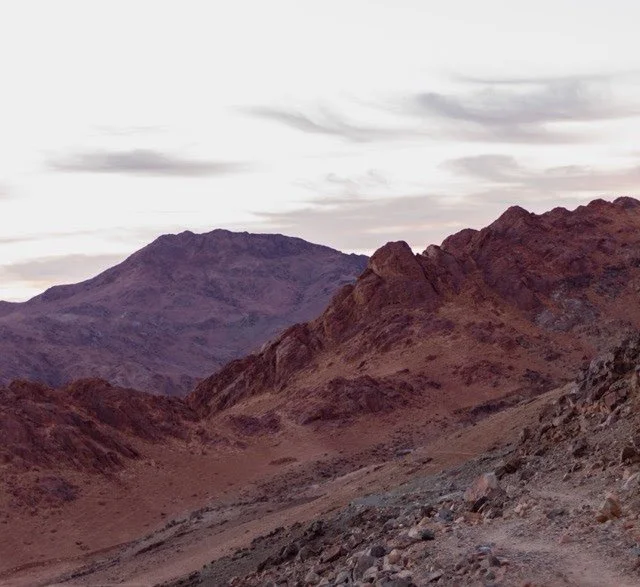
And that’s what today’s story is about. The children of Israel were at the edge of the promised land, and they could have let the Lord lead them in, then and there. But they threw that opportunity away. The consequence was that instead of going into the land, they had to wander in the wilderness for forty years. And in fact, the people who lost faith in the Lord didn’t get to go into the land at all: they wandered in the wilderness until the ends of their lives, and it was their children, their little ones, who got to go into the land when the forty years were over (vv. 29, 31). We’re definitely invited to see ourselves in the children of Israel. The question is, if we were to be in their shoes, would we make a better decision?
And of course, in its internal sense this story is about a spiritual decision that we are, in fact, being asked to make. The promised land stands for the kingdom of heaven, towards which the Lord wills to draw us, right now. There are voices inside us that say that doing it the Lord’s way is just too hard, and there are voices that say, “If the Lord delights in us, then He will bring us into this land and give it to us” (v. 8). And we get to decide which voices we believe. Will we trust the Lord and go where He sends, or not? The message, pretty clearly, is that if we choose not to trust Him we make life harder for ourselves. Wandering in the wilderness is a picture of a state of spiritual struggle, a state of spiritual homelessness. The question is, do we have to wander in the wilderness? Do we have to make things hard for ourselves, the way that the children of Israel did?
The short answer is no. There’s a chapter in the book Heaven and Hell with the title, “It is not so difficult to live the life that leads to heaven as is believed” (§528ff). There are—or at least, when the book was written there were—people who believe that in order to get to heaven you have to give up every worldly delight and spend your life in constant prayer. And that’s not true. The life that leads to heaven is not a cakewalk, but it isn’t that hard either. We turn, now, to a reading from that chapter, which you can find printed on the back of the worship handout [§533].
That passage makes essentially the same point as our story from the book of Numbers: there is an easy way—or at least, easier way—of going through this life. We can turn away dishonest thoughts and other impulses to do evil as soon as they come to the gates of our minds. What we specifically need to do is call on the power of the Lord: we need to reject those bad things because they are opposed to the Divine. That acknowledgment is what gives us the strength to reject them. And when we do this, the bad thoughts and bad impulses don’t come into us and fester in us. And if we form a habit of turning evil away at the gate, our connection with heaven and with the Lord is strengthened, and we learn to see evil and falsity for exactly what they are, and they lose their power over us. Forming that habit is not easy—it takes effort—but it is easier than cleaning up the mess that happens when we let evils and falsities into our words and our actions.
The passage takes a sober turn at the end: people who plunge into evils in early youth make things harder for themselves. That’s not exactly surprising, though it may still feel hard to hear. It is very important to note that this passage does not say that people who plunge into evils in early youth cannot be saved. They absolutely can be saved: the Lord is really good at what He does. But these people have chosen to spend more time in the wilderness than they had to.
The truth of all of these ideas is kind of inescapable: we know that actions have consequences. And yet these ideas can sit uneasily with us. That unease stems, at least in part, from a couple of assumptions that we’re prone to making—assumptions that flatten and oversimplify the realities of spiritual life. One of those assumptions is that when the Word talks about the easy path and the hard path, it’s talking about two different types of people: the people who choose the easy path, and the people who choose the hard path. And therefore we’ve got to label ourselves, and everyone else we know, as either “hard path people” or “easy path people.” Another assumption is that the decision to walk the easy path or the hard path is a single decision that people make in a single moment, and then live with forever after.
These assumptions oversimplify the picture. They aren’t always entirely untrue. A single decision made in a moment can have a profound impact on the rest of a person’s life. An example would be a decision that leads to an unplanned pregnancy. And sometimes, when you’re looking at two people, it isn’t outrageously presumptuous to think that one has chosen a better path than the other. What if you’ve looking at two twenty-year-olds, one of whom is in college and the other in prison? The point is that we don’t need to get so deep into the shades of grey that we deny the obvious.
But it is also true that people are complicated, and that we can never see another person’s internal journey, and that comparing ourselves to other people is of limited use. And there’s something in us that’s inclined to forget all of that. There’s something in us that says that there are two types of people: the good boys and girls who have always gone to church and probably don’t know any swear words, and the bad boys and girls who probably started binge drinking when they were twelve. And that’s it—that’s the world right there in those two categories. That’s a silly way of looking at people, and we know it. And yet the temptation to reduce the human race to these two caricatures is pervasive. The temptation to assume that the Lord in His Word reduces the human race to these two caricatures is pervasive. And why is that?
One answer is that hell would love for us to see the world this way. Because if our options are to be either flawless or hopeless, then either we desperately pretend that we are entirely without sin, or we give up and sin some more, since we’re broken and can’t be fixed. And either way hell wins. So that’s a bad paradigm: throw it away.
If we look at today’s story from the book of Numbers, we see people who made life hard for themselves—people who didn’t get to go into the promised land because they wouldn’t work with the Lord. And we see other people who did get to go into the land: Caleb and Joshua and the little children. We can choose to see ourselves as one or the other of those groups. Then we’re liable to feel that the Lord in His Word is giving up on us (if we identify with the people who didn’t get into the land), or like the Lord is patting us on the back (if we identify with the people who did get into the land).
There are seasons of life in which we’re more like one of these groups, and seasons in which we’re more like the other. But in general, the most useful way to look at this story is to see all of the people in it as parts of ourselves. The people who just couldn’t find it in themselves to believe that the Lord would do what He said He would do stand for what the teachings of the New Church call the “old will”—the old person that needs to be put off so that the new person can be put on (see SH §5651.2; Eph 4:22-24; Col. 3:9-10). The little children who do get to go into the land stand for the new will—the new heart that the Lord creates within us when we go to Him, willing to be reborn (cf. Ez. 36:26; John 3:3). And Caleb and Joshua stand for a voice that speaks the truth. The Heavenly Doctrine identifies Joshua in particular as a symbol for “fighting truth,” or truth that inspires a fighting spirit (SH §8595). And that fighting spirit is what we see in the story: Caleb and Joshua are the ones who say, “if the Lord is on our side, then we can do this!”
So the story is about choosing to either cling to the way it’s been—cling to the old will—or put ourselves in the Lord’s hands and do it His way. And that’s a decision that we have to make more than once. Every day we have to decide whether or not we’ll trust the Lord and follow Him. Sometimes we make the right choice, and then the Lord brings us towards that good land and puts us at ease. And sometimes we make the wrong choice, and then we have to live with the consequences. We make our lives harder than they need to be every time that we decide that we know better than the Lord. But either way, it’s not a “one-and-done” decision.
So let’s go back to the question that was asked towards the beginning of the sermon: Do we have to make things hard for ourselves? Does our spiritual journey have to be hard? No, it doesn’t have to be. Life is easier if we do it the Lord’s way. And we’re born imperfect, and it’s virtually inevitable that we will do things the hard way some of the time. The old will always puts up a fight. Sometimes the consequences of our bad decisions are spectacular, and sometimes we manage to keep them secret even from ourselves—which is its own brand of problem. The point is that everybody spends some time in the wilderness.
The more important point is that it’s not useful to play the comparison game or to define ourselves by the poor decisions that we made in the past, because we are constantly being invited to make new decisions. Yes we have to live with the consequences of past choices; but we can choose to trust the Lord now, and that will make the present journey easier.
And maybe the most important point is that whether or not we’re worthy of heaven is not our decision, but the Lord’s—and the Lord is good, and ready to forgive, and abundant in mercy to all who call upon Him (Psalm 86:5). He wants us to succeed. “If the Lord delights in us, then He will bring us into this land and give it to us, ‘a land which flows with milk and honey’” (Num. 14:8).
Amen.