A Sermon by Dan Calvo
Pittsburgh New Church
December 7th, 2025
Video:
Text:
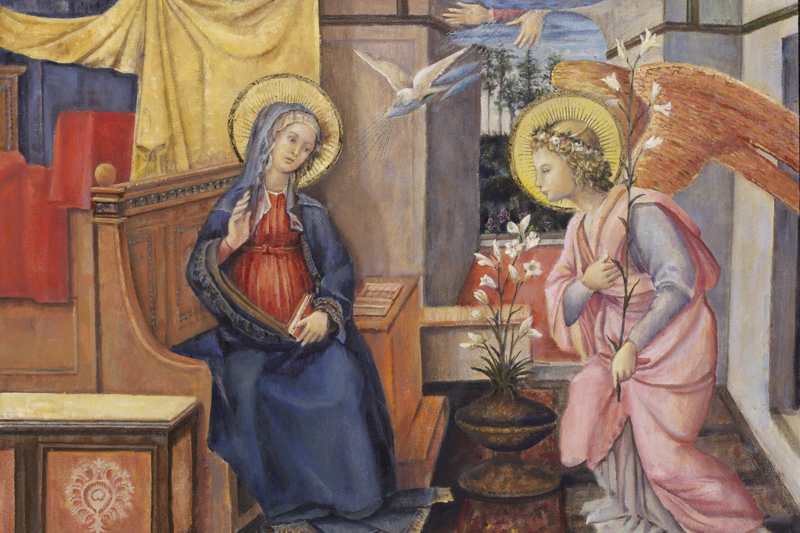
Picture this: Mary was about to start the happiest chapter of her life. She had finally found the love of her life, Joseph, and she was going to marry him. Everything that she could possibly hope for was coming together, and all of a sudden something happened that changed everything. An angel of the Lord came to her and told her: “Mary, you are going to have a baby, you are going to have the son of God: you are going to give birth to the Lord.”
In our own lives, we oftentimes go through things that are very similar to what Mary was going through in the story. Life is going great, we have a well-paying job, we have a good community around us, and the place we live in is comfortable. Everything is going okay in general, but then something comes into our mind, something that tells us to make a big change in our lives. We get a SPIRITUAL CALLING to do something completely new, a calling to do more, to give more to others, to find a way to be more useful to our neighbors. Maybe we feel a calling to find a new job that is closer to our true values and what we really want to bring to the world, or we feel the calling to volunteer for a good cause that we really believe in.
All these things are spiritual callings for change that are really good, and they can bring a lot of positive things into our lives, and yet there is always an element of uncertainty when we are faced with this powerful spiritual calling. We may feel the calling in our hearts, but we don’t know HOW this calling is going to come to life, we don’t know how it is actually going to happen. When we are faced with this level of uncertainty, we are in a position that is very similar to what Mary was experiencing in the story.
When Mary was faced with this huge calling, she could have been thinking about all the different ways in which it could have gone wrong: she could have lost her marriage, she could have lost her standing in the community, she could have even lost her life. And yet, she didn’t think about any of these things. She did not respond to the angel by asking “what if everything goes wrong?” Her answer had this childlike wonder to it, this INNOCENCE. Mary asked the angel “how can this be, since I am a virgin?”
While there was some uncertainty on her part about this new calling, her uncertainty wasn’t about WHETHER the Lord was going to make this miracle happen or not, but about HOW the Lord was going to make this miracle happen. There wasn’t a doubt in Mary’s mind that the Lord would bring this miracle to her life, and she was fully willing to be led by the Lord. Mary’s response in the story teaches us about innocence, and about how we can grow to develop a true innocence that comes from wisdom.
The innocence of wisdom is a very important concept in New Church doctrine. When we are children, we are in a first state of innocence that comes from not having knowledge of the world, so we have an innocence that comes from ignorance, and it presents as a childlike willingness to being led by our parents, teachers, and other adults in our lives. However, innocence that comes from wisdom is wanting to be led by the Lord. It is the innocent belief that the Lord is the one who is in charge, that He is the one who is going to carry us to a good result, and it is the willingness to be led by Him to that good result. The innocence that comes from wisdom in our adulthood is having experience of the world and knowledge of life and truth, and making an informed decision to allow ourselves to be guided by the Lord and by his Word. That's what the true innocence of wisdom is.
Mary, being a virgin, was still in the first state of innocence. In the Word, a “virgin” symbolizes an innocent state in us in which we want to be united with the Lord and to be led by Him. However, when Mary responded to the angel saying “how can this be?” she was taking the first steps to transition from the first state of childlike innocence to the adult state of innocence from wisdom, because she was starting to think more deeply about HOW the Lord was going to guide her, rather than passively following commands without giving them a second thought.
We can understand this more fully through this passage in Heaven and Hell, which you can find in the back of your handout, where it says that:
Real innocence is wisdom because to the extent that we are wise we want to be led by the Lord; or what amounts to the same thing, to the extent that we love being led by the Lord, we are wise. (HH 341)
In our own lives when we get this big spiritual calling for change, and we are uncertain about how this is going to happen, it can be a good approach to wonder about it and be curious about how the Lord will guide us through that calling, rather than being negative about the outcome before we’ve even gone down that journey. In the same way that Mary asked how the Lord was going to make this wonderful thing happen in her life, we can ask ourselves or meditate in prayer how He is going to make this calling come to life for us, and trust that He has a good plan for us.
This is the way to develop the real innocence from wisdom: we can do this by having an Affirmative Attitude. This affirmative attitude is the idea that while we may not understand something from the Lord, we are still willing to follow it, keep learning about it, and accept it in our lives, knowing that it is a good thing because it is coming from the Lord. That's what Mary was doing in this story, she had an affirmative attitude when the angel told her that she was going to give birth to the Lord. When she asked how this would happen, she didn't ask it from the perspective of not believing that the Lord was going to make it happen, she asked it from the perspective of wondering HOW the Lord was going to make it happen. There was no doubt in Mary's mind that the Lord was going to give her a baby while being a virgin, she was just wondering how the process was going to look.
It's interesting that the angel told her about her cousin Elizabeth and her husband Zachariah, because Elizabeth and Zachariah show a different end of the spectrum of how we can have an affirmative attitude and an innocent wisdom in allowing ourselves to be led by the Lord. Zachariah was told by the angel of the Lord that his wife Elizabeth, who was an elderly woman, was going to have a child. However, Zachariah responded in the opposite way to Mary. Zachariah did not believe that this was going to happen, he didn’t trust that the Lord would make his wife have a baby, and as a punishment he was not able to speak until his child was born.
This shows the difference between an affirmative attitude and an attitude that is not affirmative, and the difference between an innocent wisdom and a wisdom that does not allow itself to be innocent. We can't say that Zachariah was not a wise man, he wanted to follow the Lord, and he wanted to follow and teach the Law, he was a good, wise man. But he didn't fully trust that what the Lord was saying was actually going to happen. So, the road to receiving the blessing of having a child was a lot more difficult for him than what happened with Mary.
We can see this explained more deeply in this passage from Secrets of Heaven, which you can find in the back of your handout, which explains that:
Good cannot pass into a negative attitude, nor even into one of doubt, until this [attitude] becomes affirmative. (…) For good is flowing in constantly from the Lord, but where no affirmative attitude exists it is not accepted. An affirmative attitude is therefore the first means and so to speak first dwelling-place of the good flowing in from the Lord. (AC 3913)
In our own lives the more we resist a spiritual calling to become better and do more for others, and the more we push back against this spiritual growth, the harder it is for good things to happen in our lives. For example, if we get a calling to start a new job that is closer to our values and is of more use to the neighbor, if we push back against it and really don't want to embrace the calling, at some point we may start feeling unfulfilled at our job, until we make the decision to embrace this calling and go to a job that really does fulfill us and that really gives us a purpose. So even though change and growth may still happen somewhere down the line, and we may finally embrace this new calling from the Lord to change our lives, the road to getting to those blessings will be a whole lot more difficult if we don't have that affirmative attitude and that innocence of wisdom of allowing ourselves to be led by the Lord to that good result.
In the story, after Mary asked the angel how this would come to pass, and the angel told her how the Lord was going to make it happen, Mary responded by humbling herself and saying, “let it be according to your Word, I am the servant of the Lord.” Through this response, Mary was showing the development of the true innocence of wisdom in her mind and heart. Mary opened herself up to this blessing with humility, she allowed herself to be open to the change that the Lord was going to bring to her life and she allowed herself to be led in this path to come to that good result, to have the blessing of bringing life into the world. When we humble ourselves in this way, and we accept the leadership of the Lord, that is the innocence of wisdom in action.
Notice how at the end of the story Mary was neither distressed nor fearful. All that Mary had was PEACE. Peace in knowing that the Lord was taking care of her through this big life change. Peace and innocence go hand in hand, because peace itself is trust that the Lord is leading us to a good result. When we trust in the Lord, navigating change and going through all these different things in our lives becomes a whole lot more peaceful, and a lot less uncertain. The book Secrets of Heaven says that those who are in the innocence of wisdom “know that for those who trust in the Divine all things advance toward a happy state to eternity, and that whatever befalls them in time is still conducive to it” (AC 8478).
When we humble ourselves and consciously choose to be led by the Lord in our new calling, not only do we allow the Lord to bring blessings into our own lives, we allow the Lord to bring blessings and good to the lives of other people around us as well. When Mary opened herself up to that calling from the Lord, she brought the Lord to the world, she brought life. And this was not only joyful for her back then, it was joyful for every single one of us here today, thousands of years after it happened. We can do that too when we allow ourselves to innocently accept the calling: we can bring joy, peace, love, and life not only to ourselves, but to everybody around us. When we have this innocent wisdom and we are affirming, and we decide to follow our new spiritual calling, whatever that may be, wonderful things can happen!
So, if we are thinking about a new spiritual calling to do better, to be closer to the Lord and more useful and kind to others around us, let us allow ourselves to embrace the blessings that the Lord wants to bring into our lives, let us allow ourselves to make the wise choice of letting the Lord guide us, so that we may respond in the same innocent way that Mary did, by saying the words: “Behold, I am the Lord’s servant; may it be done to me according to your word” (Luke 1:38). Amen.
LESSON: Luke 1:26-38.